Mixed reactions on the appropriate electoral model for Lesotho
Formidable discussions and debates that Basotho should enter into should be about what kind of electoral democracy the country needs. Discussion about voting formulas are merely about how political parties position themselves in terms of parliamentary seats that they need to garner in the next polls
 By Mzimkhulu Sithetho 02 October, 2026
MASERU – Formidable discussions and debates that Basotho should enter into should be about what kind of electoral democracy the country needs. Discussion about voting formulas are merely about how political parties position themselves in terms of parliamentary seats that they need to garner in the next polls.
The discussions about voting formulas and electoral models is only short-term. Post the 1998 chaotic elections, evidence has demonstrated that Lesotho has experimented with the borrowed Mixed Member Proportional (MMP), which has been broached as the best electoral model for Lesotho.
However, application of the model has changed face in different stages of the country’s electoral democracy journey, depending on the level of contestation for the previous elections.
The original New Zealand Royal Commission formular is clear and has the following features; 1) basically, MMP combines single member constituency elections with proportional representation.
2) After determination of a political party’s overall proportional entitlement, the constituency seats already won are subtracted, the party receives enough additional seats to reach its proportional entitlement.
The core principle of MMP is proportionality; in that the party vote determines each party’s overall entitlement to seats in Parliament, which is counted by constituency seats. The PR seats compensate for the constituency results.
The key objective of MMP is to balance two key principles; proportionality of representation in parliament and creation of an effective parliament that is capable of forming a stable government.
For Lesotho, the main reason for ditching the historical First-Past-The-Post (FPTP) model was to address the anomaly created by the model, where it left out a huge number of voters not represented in Parliament, given its winner-take-all character.
This characteristic has been blamed for the perennial political conflicts that have dogged Lesotho after elections since independence. For example, after the 1993 and 1998 elections, a greater proportion of the nation had not been represented in Parliament, especially for the Basotho National Party (BNP).
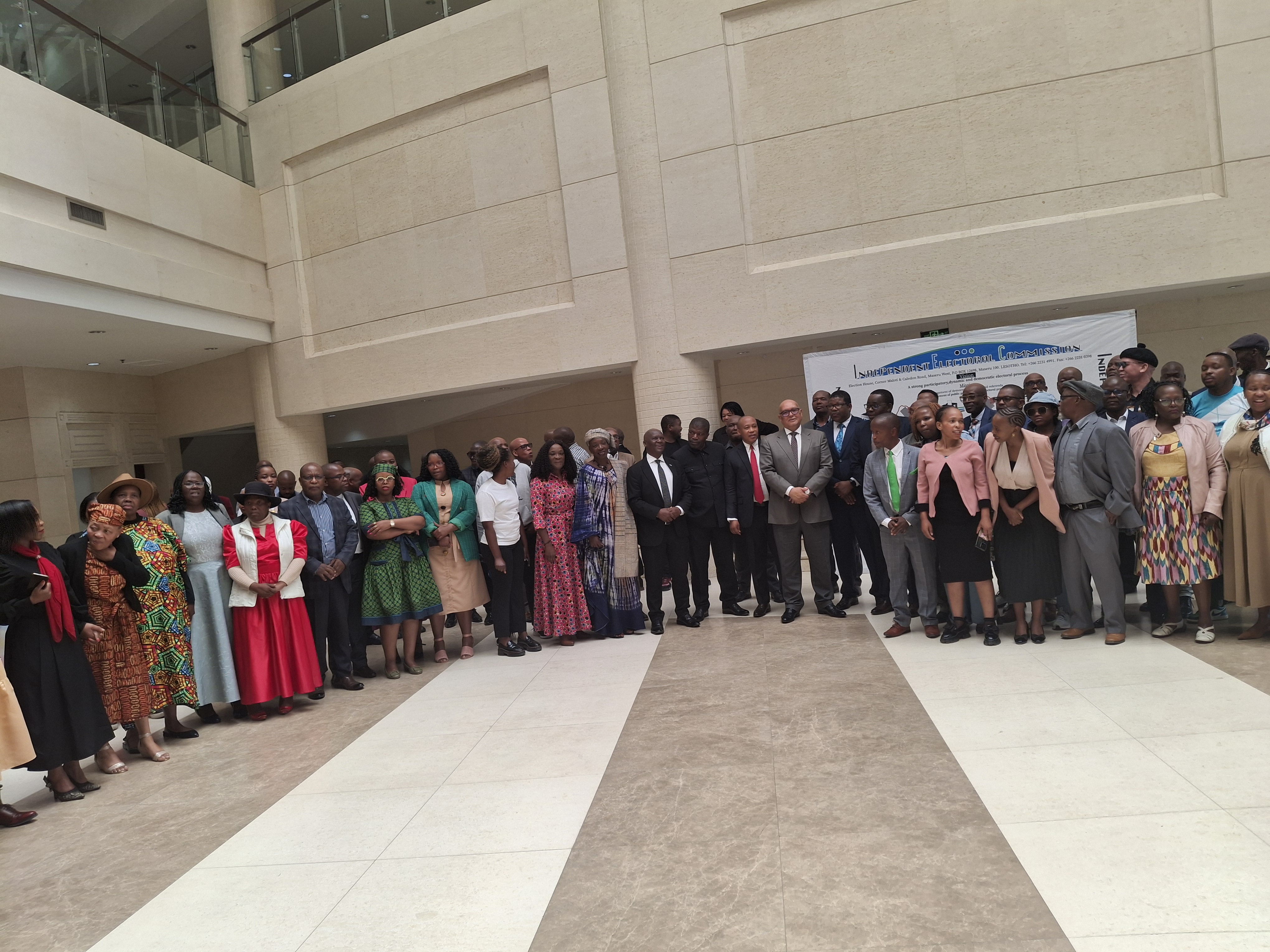
In the recent two-day electoral system review and inter-and-intra-party dialogue held in Maseru for various stakeholders, there were glaringly mixed reactions towards which electoral model best suits Lesotho. The dialogue workshop was held by the Independent Electoral Commission (IEC).
Couched under the theme; ‘strengthening electoral democracy, inclusion, public trust and consolidation of democratic development,’ the dialogue allowed participants to explore a variety of options for navigating the suitable electoral model for the country.
Some participants expressed the view that there was need to ditch the current model, the MMP; because it is not fair to contesting political parties in elections regarding the actual number of seats they deserve to have in parliament.
On the other hand, some felt that there was no need to change the MMP, but to identify its shortfalls and address specific challenges that it presents.
Those who proposed a complete shift away from the MMP want Lesotho to adopt a new electoral system in the form of the 100 per cent Proportional Representation (PR) in order to address inequalities presented by the MMP.
Conversely, proponents of the idea for retention of the MMP, argue that it has to be subjected to a review in order to address shortfalls it has shown since its application. They argue that there are benefits that the MMP has bequeathed on the electoral democracy that the country direly needs. Hence, ditching it would be tantamount to throwing the baby with the bath water.
Their key arguments is that it is not necessarily the electoral model that falls short of its guns to present Lesotho with the much-needed stability of democracy. They argue that it is the chicanery of political players, who are often on the lookout for manipulatively benefiting from the model.
The argument from this side states that during the initial application of the model in the 2002 elections, there were no qualms about the model because the country was experimenting with the model.
Politicians had not become clever enough to realize how they could manipulate the model. That election presented the country with a stable political climate post the election.
They argued that drama ensued towards the 2007 election, which was highly contested. Two big political parties then, the Lesotho Congress for Democracy (LCD) then an incumbent and the newly-formed All Basotho Convention (ABC), formed informal electoral pacts that undermined the MMP.
The political chicanery started here when LCD and ABC harbored deceptive plans to take advantage of the model to drum up their majority in Parliament.
This saw LCD getting 21 PR seats, which were in the bag of the its alliance partner, the National Independence Party (NIP), this bringing its total seats to 82.
LCD had gotten 62 constituency seats. LCD ruled smoothly, enjoying a two-thirds majority with the help of the NIP PR seats.
For the LCD/NIP alliance, LCD was the main beneficiary far more than its partner as this alliance sparked political eye-brows that LCD lacked the magnanimity of giving NIP even one cabinet seat.
The late Dominic Motikoe received harsh criticism from the opposition side for selling out to the extent of marginalizing the party for no benefit accruing to the party, while the LCD enjoyed a comfortable majority.
LCD appointed ministers to cabinet, drawing them from the NIP’s 21 seats, as most of them, who had lost in their constituencies, saw their way into Cabinet through their closed listing in the NIP PR. That was total chicanery.
On the contrary, LCD’s arch-rival, then, the ABC, did the same by cobbling an informal electoral pact with the Lesotho Workers Party (LWP), snatching 10 additional PR seats through the LWP ticket to make its total 27.
ABC was able to comfortably give the LCD a tough oppositional stance, bolstered by the LWP’s 10 PR seats and if there was fair play in Lesotho’s nascent politics, ABC Leader, Motsoahae Thabane could have been appointed Official Leader of Opposition in 2007.
During the discussions at the high-level stakeholder platform organised by the IEC, Executive Director of Lesotho Council for NGOs (LCN), Sekonyela Mapetja strongly argued that there was a misconception that the MMP the PR component of the MMP was compensatory, which he said it was not.
He argued that it was not necessarily the fact that the MMP has had problems during its application since its adoption.
He said that it was the manner the MMP was applied, together with the opportunistic tendencies of politicians, who harbored political interests, which rendered the model unusable.
Meanwhile, the Democratic Congress (DC) Leader, who is Official Leader of Opposition in the National Assembly, Hon Mathibeli Mokhothu reminded the forum that the introduction of the MMP was influenced by the need to address the issues of wasted votes, in that the FPTP had left those who have lost at the polls outside parliament.
Hon. Mathibeli cast critical aspersions on the MMP in that it was problematic to the extent that it is not a fair electoral system that Lesotho could continue with.
He said that the key feature of the MMP’s PR component was to ensure proportionality in representation in Parliament, so that each party gets votes that are proportionate to the votes it has obtained. He said this is the area which brings about unfairness to participating parties.
He presented the example of the recent election of 2022 where the voter turnout was 37.8 percent and the ruling coalition leader Revolution for Prosperity (RFP) got 200, 390 seats and DC got 128,105 seats.
The paradox that he presented was that when it came to allocation of seats, the RFP got 57 seats, making it 47.5 percent, almost double those of the DC, which got 29 seats, constituting 24.2 percent.
He argued that the challenge of the MMP was not about how the candidates are listed in the PR list; but that it is fundamentally an unfair electoral model.
Hon. Mathibeli therefore proposed a regional voting and allocation of seats – done through districts. He said the country should return to the two-ballot system.
He argued that the FPTP component of the model is the one that undermines its spirit of proportionality, hence, his proposal for a shift to a 100 percent PR.
The view that the MMP is no longer serving Basotho as had been originally intended received the support of some participants, one of them being Mr Teboho Sekata, the Public Relations of Government, who said that the current MMP model should be phased out as it is no longer good for Lesotho.
Mr Sekata argued that the spoiler is the National Executive Committees (NECs) of parties, which he said abuse their power, undermining the model.
He argued that NECs bring people who are not known within political parties; downplaying the fact that there are people within political parties, who have worked hard in the party, but who are bypassed by the newcomers who are not known. “We should not be ashamed that everyone works for himself,” he said.
He said that the MMP leads to the mushrooming of new political parties, arguing that the closed PR system is the one that creates problems for the model.
Meanwhile, the Leaders of the LCD, Hon. Metsing argued that there was need the IEC and political parties to embark on an intensive civic education to teach citizens about the model in terms of how it works. He said they need to understand how their votes are converted into seats in Parliament.
Hon. Metsing was against the view that the model must be ditched altogether, but said a review of the model must be undertaken to find out where it falls short of meeting the voters’ expectations and then improvements would be made to address the gaps.
This sentiment of not totally ditching the model for another was shared by Ms Futho Hoohlo, who asked a question about where the model had fallen short.
What should be Lesotho's top economic priority?
Government is weighing where to focus limited resources. Where would you put them first?
Share this article
Related Articles
Civil society’s role in the implementation of the African Peer Review Mechanism (APRM)
Lesotho has traversed a not-so smooth journey of implementing the African Peer Review Mechanism (APRM). At the accession and mobilization formative stages, Lesotho put up a positive stature towards embracing and implementing the APRM.
Tracing Lesotho’s APRM journey since accession - taking stock of achievements, challenges and forecasting the future
After acceding to the African Peer Review Mechanism (APRM), Lesotho demonstrated strong ownership and institutional mobilization of Basotho on the APRM. This was at the initial stages of this continental, home-grown governance-monitoring and implementation system.
Demystifying the beneficiation mantra in Lesotho’s mining sector
The concept of ‘beneficiation’ in the mining sector of Lesotho and everywhere else has increasingly become an attractive mantra that promises a shift from simply extracting minerals and exporting them in their relatively unprocessed form.

The danger of social media to society – creation and promotion of 'eco chambers'
Echo chambers, often amplified by social platforms, shape and dominate discourse, undermining equal participation, freedom of expression, and balanced debate.