Low voter turnout for elections a major concern for political players and analysts
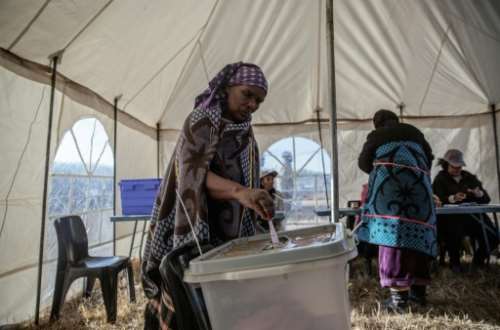
Political players, analysts and participants at the recent electoral system review and inter-and intra-party dialogue were unanimous that the increasing decline in the interest in elections by voters is a matter of serious concern.
 By Mzimkhulu Sithetho 04 October, 2026
MASERU 04/10/2026 – Political players, analysts and participants at the recent electoral system review and inter-and intra-party dialogue were unanimous that the increasing decline in the interest in elections by voters is a matter of serious concern.
The participants delved on how voter apathy is undermining electoral democracy because it breeds a minority government, which is an anomaly in a growing democracy like that of Lesotho.
The participants at the workshop laboured on the fact that while democracy is good for citizens, but if their living conditions remain the same, that democracy becomes worthless to say the least. This buttresses the view that ‘people do not eat democracy.’
The leader of Lesotho Congress for Democracy (LCD), Hon. Mothe Tjoa Meting argued that one contributing factor is that politicians that are contesting elections are barred from transporting voters to polling stations on election day.
Hon. Meting advanced the argument that some voters travel long distances to polling stations, and if contesting politicians were allowed to help commute them, that would increase voter turnout.
Meanwhile, the Public Relations Manager in the Prime Minister’s Office, Hon. Teboho Sakata apportioned blame on the delimitation of constituencies, which he said overlooked the critical topographic issues within constituencies.
He said the manner constituencies are delimited contributed to low voter turnout because due to the topography of the country, some polling stations are too far from voters.
Leader of the Yearn for Economic Sustainability (popularly known as YES), Molefi Ndonyane decried the move to amend a law making it legally binding for citizens to register for elections, but voluntary to vote.
Mr. Ndonyane said that he disagreed with this move because it would plunge the already precarious situation of voter turnout into further decrease.
There was general agreement that the IEC needed to work on cleaning the voters rolls from time-to-time.
Voter turnout has gradually decreased from 1993 to the last election held in October 2022.
The discussion on the decline in voter turnout is not just an electoral management body (IEC)’s issue, but remains a multi-sectoral and multi-dimensional issue. Neither is it a voter education problem.
If voter turnout continually decreases, it raises questions about the political legitimacy of political players and political and electoral institutions.
Declining voter turnout touches on party behavior, electoral system incentives and government performance once political parties are elected to run government.
Furthermore, declining voter turnout is an issue of the public’s trust in the electoral process and system, representation and the relationship between citizens and the political elite.
A critical analysis of Lesotho’s voter-turnout trajectory from 1993-2022, within an almost three-decade period indicates that Lesotho has moved from an exceptionally high electoral participation to a less than four in tern registered voters.
After restoration of multi-party democracy in 1993, there were 736,930 voters with 532,678 voters coming to the polls. This accounted for 72.3 per cent voter turnout, which was high.
Some political pundits argue that the fact that the Basotho had been denied their right to vote for two decades (1970-1992) could be ascribed for the high increase in voter turnout.
When multipartism and citizen rights to cast a vote in the ballot box were allowed, it increased their interest in elections.
In a subsequent election held in 1998, which later turned out to be riotous, there was an increase in the number of registered voters from 736,930 to 860,000.
Also, voter turnout increased from 532,678 to 617,738, with a resulting percentage of 74.4 percent. In total, there was a 2.1 percent increase in voter turnout from the 1993-1998 poll.
Voter turnout for the 1998 polls was high, though its aftermath unfortunately became chaotic. Analytical arguments would rightly posit that youth who were 17 years old in 1993 had become 18 in 1998, hence, increasing the voter turnout.
Another reason would be the split in the then ruling Basutoland Congress Party (BCP), which had led to the birth of the LCD, rejuvenating the voters’ interest to go to the polls.
In 2002, an election that came earlier than expected, when it was supposed to be in 2003 according to the elections calendar, marked a slight decline from the two previous elections of 1993 and 1998 respectively.
The 2002 election had a total of 831, 315 registered voters, but only 554, 386 voters going to the polling stations. This accounted for 66.7 percent.
There was a relative decrease in the percentage voter turnout for this poll, but still it was reasonably and moderately high, though comparatively low when looking at the two previous ones.
Arguments would be that the citizens would have been scared of the polls, after the political mayhem of 1998. But still, the citizenry is not that static, it evolves and politically grows in how they understand and interpret political developments.
However, other arguments would be that a new electoral model had been introduced, giving the voters a new electoral innovation with which to experiment. But still, it depends on the extent of electoral and voter education that the IEC and political parties had embarked upon. Furthermore, would a new electoral model entice voters to register and go the polls?
A serious drop in the voter turnout started in 2007 when it hit a low of 49 percent. Registered voters for that highly-contested poll stood at 916,230, but the total number of voters was 448,953 accounting for 49 percent.
Up to 2007, there had been an upward trend of voter registration from 1993, but this is not followed by a corresponding voter turnout. Maybe the argument that the fact that registration for elections is legally binding, while voting is optional holds the day.
The 2007 election was interesting because a new baby in the block had entered the political race, the All Basotho Convention (ABC). However, the February election was hurried and made to be a snap election, being brought forward for about five-six months. However, it was held within the same election year as a normal election would have been held.
The formation of the ABC threatened the ruling incumbent, the LCD and this forced an early poll in February instead of June or July 2007. Electoral preparation was called to question as IEC only had to make electoral arrangements after October 2006, after formation of the ABC.
Voters were not ready as voter education was done hurriedly, fielding of candidates, training of voter educators, polling officers and many other arrangements. These followed an abrupt dissolution of Parliament.
The 2012, 2015 and 2017 polls registered voter turnouts of 50%, 46.6% and 46.4% respectively. The polls had seen 564,451, 563,972 and 581,692 voters turning to vote in 2012, 2015 and 2017 respectively.
These were against voter registrations of 1,127,980, 1,210, 079 and 1,254,506 respectively. The trend of voter turnout shows a negative trend against voter registration, in that, while voter registration was increasing in the three years, there was a downward trend on the voter turnout side.
The latest poll of 2022 saw 1,375, 753 voters registering for elections, but the voter turnout decreased to a low of 37.4 percent.
The trajectory has been such that from the democratic poll at the second wave of democracy in 1993, to the 1998 poll, a percentage increase in voter turnout stood at 2.1%. From 1998 to 2002, voter turnout decreased by a whopping 7.7%.
As if the percentage decrease in the voter turnout from 2002 to 2007, the latter poll registered one of the lowest voter percentage decreases in history, which stood at 17.7%. this was against the backdrop of a high voter 916,2430. The number of voters had increased by 84,915 from 2002 to 2007. However, the voter turnout terribly declined.
Another shocking trend was that of between 2007 and 2012, when voter turnout only increased by a sheer 1% from 49% to 50% respectively. It was shocking because the election was one of its kind, which brought about a major shift in the political landscape of Lesotho.
The poll failed to breed an outright winner, ushering in a hang parliament, and by implication forcing coalition arrangements to form government. While there was high political and electoral fanfare during the campaign period, the percentage of voters who finally made it to the poll only made a disappointing 1%. Voter registration had reached way above million voters, for the first time in 2012, but the percentage of those who actually went to vote did not correspond with this increase.
The next set of polls (2012, 2015 and 2017) is interesting because voters were forced to go and determine their political leaders within a short space of time, two-and-halt years. This means that voters went to the polls while the previous poll was still fresh in their minds.
The difference between the 2012 elections and the 2015 one is just 3.4 percent. Voter apathy had reached fever-pitch. The same can be said about the voter turnout between 2015 and 2017, with the decrease marking only a 0.2 percent.
An argument could be made that there was a very slight difference because voters did not understand why they went to the polls just two years down-the-line from the previous poll. So, a majority did not go to polling stations, in other words, they boycotted the elections.
It will be remembered that from the period 2012 to 2017, there was a sharp increase in intra- and inter-party conflicts, these driving others to form new political parties.
On the flipside, service delivery to the people had dropped to levels never seen before. Also, corruption levels had tremendously increased.
Meanwhile, the 2022 election registered an even lower voter turnout of 37.4 percent. This was against an increase in voter registration that was one of the highest, standing at 1,375,753. The increase of voters who registered for the 2022 poll from the previous poll stood at 121,274, but this increase was not met by a corresponding increase in voters who went to the polling stations to vote.
This trend of increasing numbers of voters registering for elections, but who are not turning out to vote on polling day continues to give credence to the argument that the legal binding character of voter registration has more effect over a voluntary voting requirement.
But now, with the IEC pushing for making both voter registration and voting voluntary will make matters even worse. Even though the current situation of high voter registration, which is not met by a corresponding voting population is not worth the salt, loss of both would even be a greater would.
-End-
What should be Lesotho's top economic priority?
Government is weighing where to focus limited resources. Where would you put them first?
Share this article
Related Articles
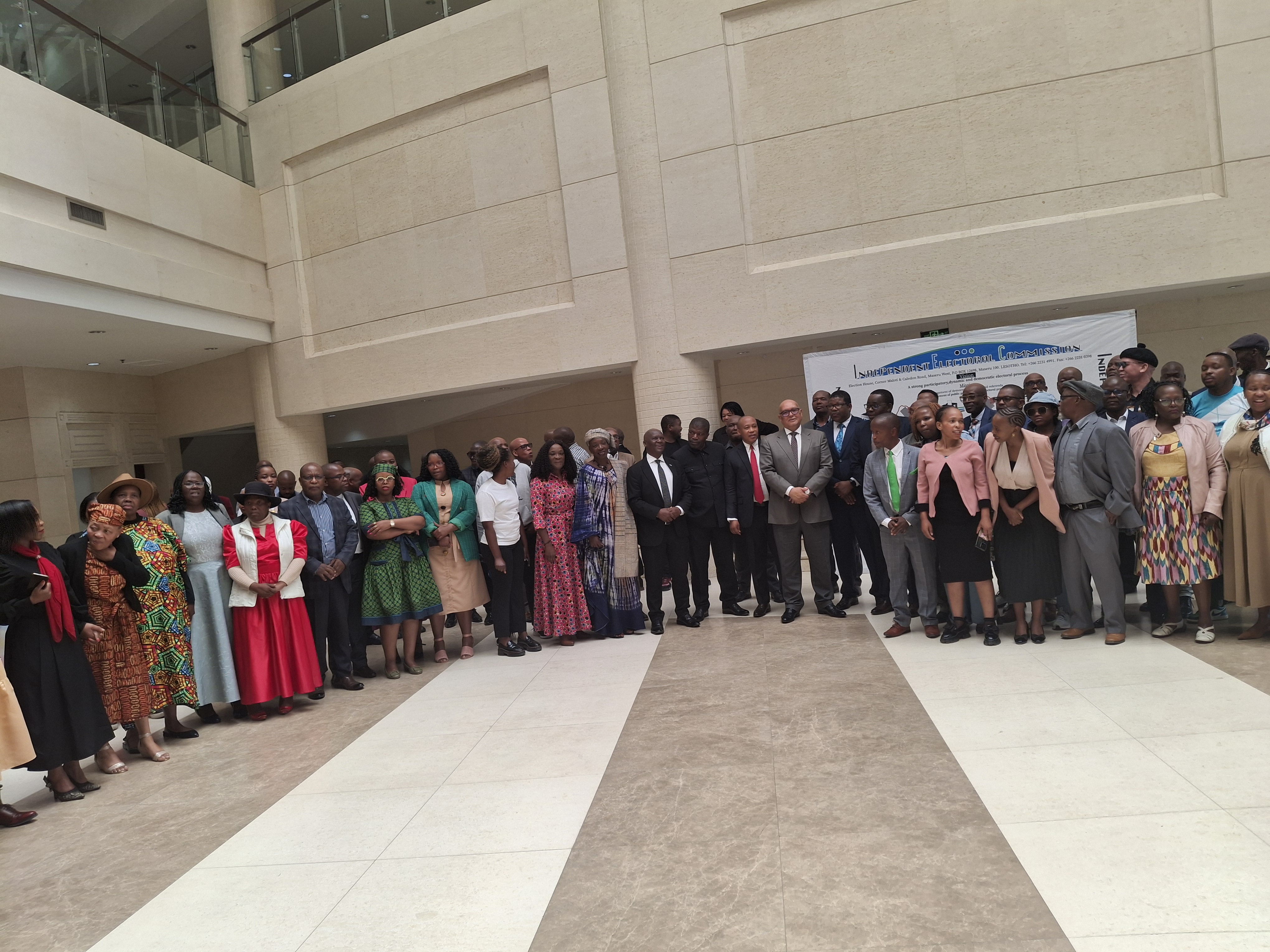
Mixed reactions on the appropriate electoral model for Lesotho
Formidable discussions and debates that Basotho should enter into should be about what kind of electoral democracy the country needs. Discussion about voting formulas are merely about how political parties position themselves in terms of parliamentary seats that they need to garner in the next polls
Mixed reactions on the appropriate electoral model for Lesotho
Formidable discussions and debates that Basotho should enter into should be about what kind of electoral democracy the country needs. Discussion about voting formulas are merely about how political parties position themselves in terms of parliamentary seats that they need to garner in the next polls
Civil society’s role in the implementation of the African Peer Review Mechanism (APRM)
Lesotho has traversed a not-so smooth journey of implementing the African Peer Review Mechanism (APRM). At the accession and mobilization formative stages, Lesotho put up a positive stature towards embracing and implementing the APRM.

Tracing Lesotho’s APRM journey since accession - taking stock of achievements, challenges and forecasting the future
After acceding to the African Peer Review Mechanism (APRM), Lesotho demonstrated strong ownership and institutional mobilization of Basotho on the APRM. This was at the initial stages of this continental, home-grown governance-monitoring and implementation system.