Around the world, entrepreneurs are the bone-marrow of a country’s economy. Just like a bone marrow produces blood
cells that are necessary to sustain human body, MSMEs do so, by helping sustain the economic circulation of a country.
MSMEs produce the everyday economic activity that keeps communities, households, markets and businesses
functioning. MSMEs sustain the daily circulation of money between buyers and sellers, at a time when those employed
to work in offices wait for a monthly salary/wage from their employers to pay bills.
However, MSMEs face a myriad challenges in their daily operations. They sometimes lack the much-required capital to
grow their businesses. Also, MSMEs lack sufficient money to buy stock and raw materials. When they run to banks to get funding, MSMEs do not succeed because banks regard them as a high-risk investment area. During trying times like the one that the
business sector is in globally,
MSMEs are on the receiving end of the harsh realities of a volatile global environment. They struggle to get customers for their products and services. This policy brief, therefore, provides a deep analysis of the reasons why interventions that the government and other private sector development
agencies embark upon fail.The policy analysis seeks to understand the reasons why there are many government interventions and
other agencies’ yield little in terms of changing the situation of MSMEs. The policy brief intends to find out why access to markets is still a challenge while there are many agencies including the government that seek to expose MSMEs’ products to potential buyers.
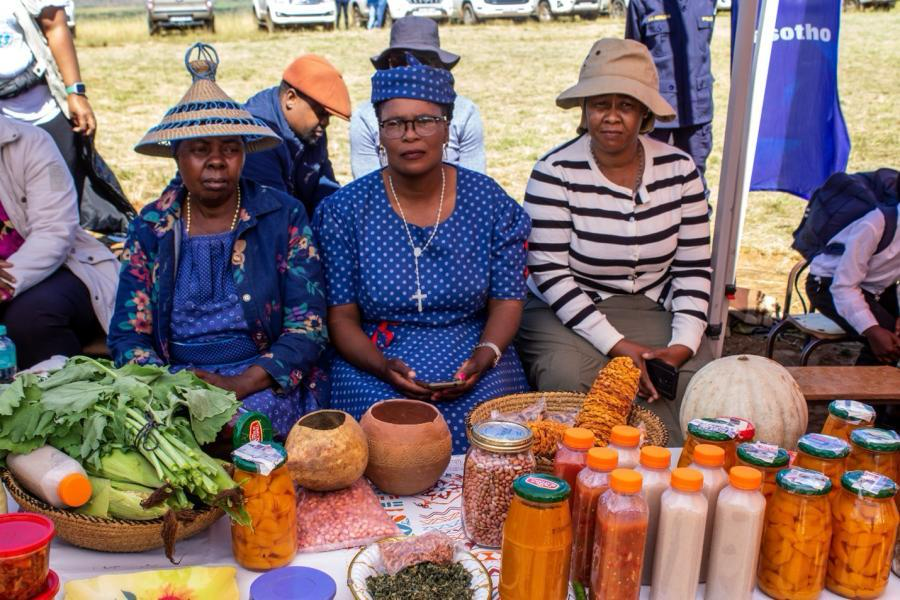
These they do through local flea markets and external trade fairs, trade shows and exhibitions around the world. MSMEs expect to get orders for their products from various customers who have seen them during the flea markets and the other external market access
platforms mentioned above.
State of the MSME sector of Lesotho
Findings of the Finscope Study of 2023
(comparing a previous one of 2016)
Introduction
The Government engaged the Finmark Trust to undertake a survey on the state of MSMEs in Lesotho in 2016 and 2023 (Finscope Survey). The Finscope MSME survey of 2026 and 2023 was designed to find out the size of the MSME sector of Lesotho. It was intended to examine the state of financial inclusion of MSMEs, identify constraints to business development and recommend interventions for improvement.
Size of MSME sector, contribution to the economy The Finscope Survey revealed that there was an increase of 31,068 from 2016 to 2023 micro, small and medium enterprises, having reached a record of 107, 753 from 76,068. These entrepreneurs are business owners in Lesotho.
It has said that there were 255, 420 people who employed in the MSME sector, up from 118, 000 in 2016. These include owners of businesses. This meant that while the MSME sector had created only 42, 000 jobs, excluding the owners, this number increased by 137, 290, almost by 100% within seven years.
It also revealed that business owners aged 35 or younger made 32 per cent of the entire MSME business. These statistics painted a gloomy picture of the participation of young people in the MSME sector. It might be revealing a lot regarding graduates who seek to be employed in the formal job market upon completion of their tertiary education, which results in many graduateshaving to waited more than five-ten years before they are absorbed by the civil service or the private sector.
A greater proportion expect to be absorbed in the civil service because if is permanent and pensionable. There are few who look for employment in the private sector, which is on contract bases and non-pensionable. As well, the private sector requires potential employees to possess high qualifications and long years of work experience.
The International Labour Organisation (ILO) estimates that the entire government workforce is around 54, 000, of which 17, 185 are in the civil service. There is a backlog of more than 10, 000 Basotho, especially young people, wating to find employment in the civil service.
The Council of Higher Education Report (2022) indicates that there were 4,139 graduates who were unable to find employment for the period 2015/2016. This decreased to 2, 836 for the period 2016/2017 and increased again to reach a high of 3,351 for the period
2017/2018. This bring the total of graduates who were waiting to be absorbed into the job market to 10,326 for the period 2015-2018.
This has a direct revelation that most young graduates do not resort to business to become entrepreneurs upon completion of their tertiary studies, but instead, loom for paid jobs in the formal job market. Reasons for getting into the MSME business sector include having no other alternative for a job, but using it as a last resort.
Hence, entry into the MSME business is in large, by people who have no entrepreneurial spirit or culture, but who have been pushed by family circumstances to look for something with which to eke out a living.
According to the study, business owners who relied exclusively on the income made from the business made 70 per cent of the total MSME business. It was also revealed by the study that business owners who earned below M2,000 per month constitute 45 per cent of the total MSME.
This revelation talks directly to the profitability or lack thereof the private sector, especially at MSME level. It shows that those who are in the micro, small and medium business only look for making a survival, rendering the sector to be more survivalist in character. This has implications for small-scale investment in the private sector.
It would not be otherwise if entry into the sector was for merely to eke out a living for a day or using the small income generated to pay for children’s school fees. This also accounts for why most MSME do not graduate to the next level of business, but remain
there for ages.
It was 83 per cent of the total MSME business, of business owners who did not have employee in 2016, which decreased to 71 per cent, meaning they did everything as sole traders as well as doing everything in the business by themselves, as revealed by the study.
The increase from 17% of enterprises that created jobs by engaging workers to 29% is a welcome development, as the country has called on the private sector to create jobs. This has, to some extent, relieved the Government from this role, though the percentage is still low, compared to scores of Basotho youth who have graduated from tertiary institutions who look for jobs in the civil service.
Of the total 76,000 MSMEs, 64 per cent had operated for more than three years, as at that time. Also of this total, only 18 per cent were registered entities, meaning that a great proportion of MSME, accounting for 82 percent were not registered. This landscape of the MSME sector on ownership in Lesotho, painted a not so impressive picture of the entire MSME regarding ownership.
It would not be deciphered that the situation has changed, though the period is now 10 years back, given factors such as the COVID-19 and the ongoing geopolitical tensions around the globe as well as the two years of the Donald Trump regime. The latter inflicted more pain on MSMES with high price hikes for commodities, including raw materials for MSMEs.
Sectoral distribution of MSMEs
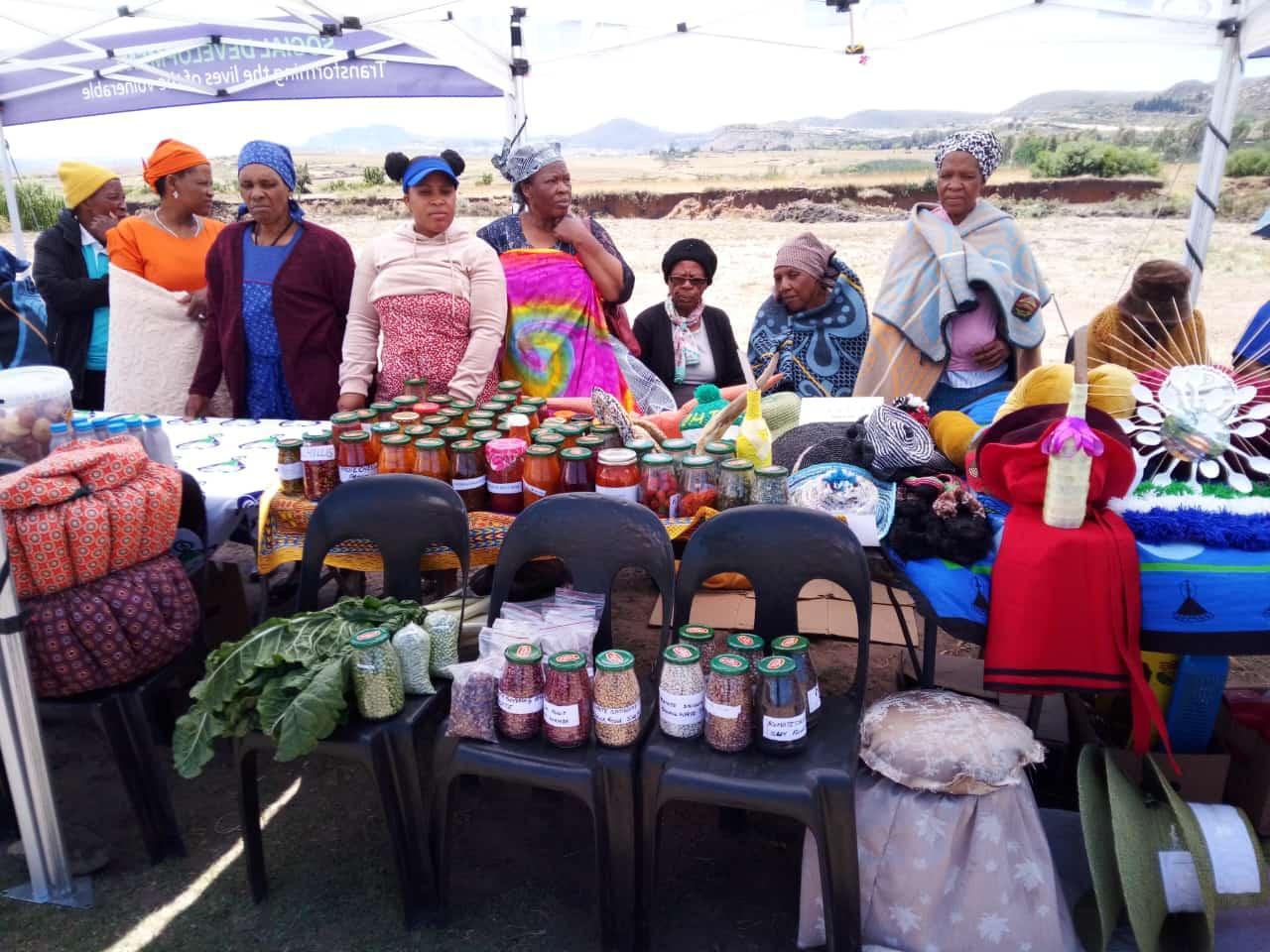
The Fiscope survey indicated that there were seven (7) key sectors within which MSMEs were found 10 years ago – wholesale and retail trade (30%), agriculture (22%, accommodation and food services (10%) as well as manufacturing (9%). Other include tourism (10% in 2016, which decreased to 4% in 2023. Business services had stood at 1% in 2016, but increased to 10% seven years later in 2023.
Meanwhile community and household had decreased from 8% in 2026 to 5%. In 2023, construction had remained the same, standing at 2%, recording no change from what it was in 2016.
Other sectors include fruit and vegetable, which are sold along the streets, second-hand clothes and producers of clothing. The latter constitute 29% of the total MSME business.
According to the survey, the dominance of the wholesale and retail trade suggests that a great proportion of the MSME economy was involved in the purchase and sale of goods rather than production of new products. Also, the survey revealed that agriculture presented significant opportunities, with livestock reading being the prominent enterprise while crop production accounted for only a small proportion of trade.
There is a lingering question about MSME participation in wool and mohair processing, livestock value chains, horticulture and food
processing and agricultural distribution. The latter accounted for a small fraction of the entire agriculture sector.
Sources of start-up capital
According to the Fiscope Survey 2023, there is an observed improvement in the financial inclusion of MSME, though access to business credit still remains weak. There is decrease in percentage of MSME owners who put their money in the money from 41% to 34%. Also, the percentage of MSMEs who have received banking services from financial institutions has increased from 45% to 85%.
Digital transformation should not be restricted to creating social-media accounts. It should involve the integration of digital tools into the everyday management, production, marketing, financial administration and delivery of business services.
Technology adoption and digital transformation services include digital payments, which are about mobile money, electronic payments and merchant payment systems. Digital bookkeeping services include accounting and financial-management software.
Mentorship, coaching and enterprise incubation
The purpose is to provide entrepreneurs with practical guidance, continuous learning, professional networks and support in overcoming business-growth challenges. Training alone is not sufficient. An entrepreneur may attend a workshop on business management but still lack the practical ability to apply the knowledge to a real business.
Mentorship and coaching should therefore accompany training and continue as the business develops. Mentorship, coaching and enterprise incubation services include one-to-one business mentorship, business-growth coaching and sector-specific technical mentorship.
Access to finance and investment
Access to finance and investment ensures that MSMEs have access to affordable and appropriate capital at different stages of business development. Access to finance is one of the most significant constraints facing MSMEs in Lesotho. However, financing needs differ substantially between an individual entrepreneur requiring working capital and a manufacturer seeking millions of maloti to purchase machinery.
The financing ecosystem that BDSP should focus on include start-up grants, which result in supporting viable early-stage business ideas, seed capital, resulting in helping new enterprises commence operations. Also, working-capital loans intend to finance stock, wages and operational expenses
Export readiness and value-chain participation
The purpose of the intervention is to enable MSMEs to move beyond local markets, participate in regional and international trade, supply larger enterprises and benefit from regional economic integration.
Furthermore, export readiness is not merely the ability to identify a foreign buyer. An enterprise must be capable of producing the required quantities, meeting quality standards, pricing competitively, managing logistics, completing trade documentation and delivering consistently.
Policy discussions
The above-mentioned state of the MSME sector has many policy implications, especially for the Government and the private sector to push the Government to make policy changes to improve the sector.
One, the wholesale and retail sector dominate the MSME landscape, but the Government should invest more in production and value addition. This means that it should reduce its heavy reliance on trading imported goods.
Two, the Government should invest more on manufacturing, leveraging the 100% increase in the sector from 2016-2023. There must be serious policy considerations and implementation to strengthen local industrialisation.
Three, there is a glimmer of hope presented by the increase in agriculture as a major enterprise sector, as this could support agro-processing, food production, horticulture and the rural enterprise development.
However, this sector remains largely peasant or production for consumption only, and not commercialised, which would add greater value to the sector.
Four, the decline in the tourism’s share to the MSME sector is a matter of great concern, and suspicion is that COVID-19 contributed immensely to the decline.
MSME Policy
Government should facilitate the evaluation and develop a successor MSME Policy and Strategy for 2027–2030. The successor policy should have a dedicated chapter on Business Development Services, with specific provisions on:
• Registration and accreditation of BDS providers.
• Professional standards and service-delivery requirements.
• Government support for private BDS providers.
• Enterprise diagnostic and referral systems.
• BDS financing and subsidised services.
• Market access, product innovation and technology.
• Monitoring, evaluation and impact assessment.
The new policy should also clearly distinguish between the responsibilities of Government, BEDCO, private BDS providers, financial institutions, business associations and development partners.
BEDCO Act No. 9 of 1980, as amended
The Basotho Enterprises Development Corporation (BEDCO) is the central statutory institution for the promotion and development of Basotho-owned enterprises. Its mandate includes developing indigenous entrepreneurial skills, providing business-development support, facilitating incubation, advocating for an enabling regulatory environment and facilitating access to finance and markets.
National Trade Policy
The National Trade Policy provides a foundation for increasing the competitiveness of Lesotho's goods and services and improving access to domestic, regional and international markets. Required policy action: Develop an MSME Market Access and Trade Facilitation Implementation Framework.
It should provide for market intelligence and trade information services. Also, it should provide for buyer-supplier matchmaking, local supplier-development programmes and trade fairs and exhibitions.
Financial Sector Development Strategy II
2025–2030
The Financial Sector Development Strategy II is an important instrument for improving access to finance and strengthening the financial system during 2025–2030. It recognises that banks often perceive MSMEs as high-risk borrowers, that many enterprises rely on owners' savings or family contributions, and that business-management and financial-literacy weaknesses make it harder for enterprises to become bankable.
The strategy identifies the need to strengthen credit reporting and information infrastructure. It needs to improve the use of movable assets as collateral. It also has to reform and coordinate partial credit guarantee schemes.
Recommendations
Lesotho should develop a Local Economic Circulation Strategy that promotes local procurement, local production, community-based
enterprises and the retention of a greater proportion of economic expenditure within the domestic economy.
Government to establish an MSME Innovation and Enterprise Incubation Programme, connecting entrepreneurs to research institutions, universities, technology providers, mentors and innovation financing.
Government should recognise viable self- employment and enterprise development as central components of its employment and poverty-reduction strategy, rather than treating entrepreneurship as a secondary intervention.
Government to establish a National MSME Development Coordination Council, with BEDCO playing a central technical and implementation coordination role.
Government to introduce a results-based BDS funding model. Public and development-partner financing of BDS providers should increasingly be linked to measurable outcomes such as:
• Enterprises established.
• Enterprises surviving after three years.
• Enterprises expanding their turnover.
• Jobs created and sustained.
Government to develop an MSME Market Access and Trade Facilitation Implementation Framework. It should provide for market intelligence and trade information services.
Also, it should provide for buyer-supplier matchmaking, local supplier-development programmes and trade fairs and exhibitions.