By Mzimkhulu Sithetho 27 October 2026
MASERU – 27 October 2026: Lesotho has been elected to join the Southern African Development Community (SADC) Organ on Politics, Defence and Security Cooperation. This good news for Lesotho and Basotho happened at an Extraordinary Summit of SADC held virtually on 21 October 2026.
The development, which places Lesotho on the regional map heralds the country’s leadership of the Organ in the next round of leadership of the organ, which is done on an annual and rotational basis.
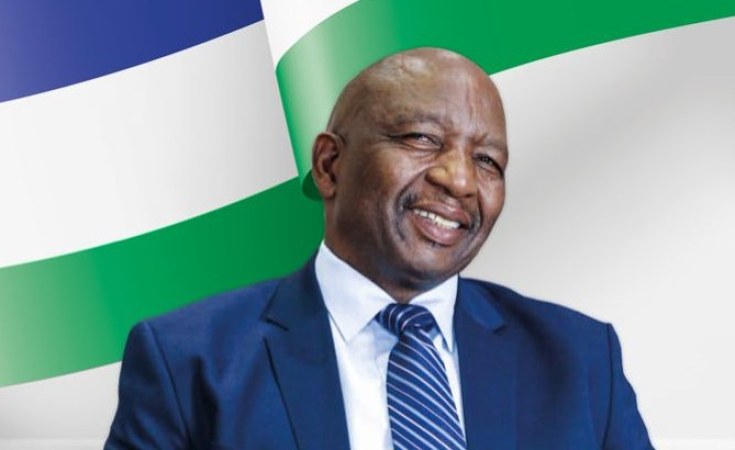
Lesotho, led by Prime Minister Samuel Matekane, is an incoming-Chairperson of the Organ and will take over from the Kingdom of Eswatini, led by King Mswati III. The outgoing Chairperson is Malawi, which is led by President Arthur Peter Mutharika.
The SADC Organ on Politics, Defence and Security Cooperation is a regional institution of the SADC, which is responsible for promoting peace, political stability, democracy, security and cooperation among SADC member states.
The Organ is managed on a Troika basis, being formed of three countries – an outgoing Chairperson, the current and incoming Chairpersons.
The Organ is tasked to ensure political stability, peace and security in the region. It is mandated to steer the strategic direction of the SADC region on matters that can threaten peace, security and stability in the region.
The Organ is coordinated at the level of Summit and reports to the SADC Summit Chairperson. Operations, functions and the structure of the Organ are regulated by the Protocol on Politics, Defence and Security Cooperation.
Lesotho has, for a long time, been a beneficiary of the Organ during the hay years, when it was dogged by incessant political instability and perennial periods of absence of peace.
The country has suffered years of military intrusion into its political domain, which has threatened to undermine civilian authority. However, in the recent past, since the dawn of the second wave of democracy in 1993, Lesotho has not experienced a coup.
As a small and fragile state, Lesotho’s political instability is not unique in the region, but when it happens, it threatens the very foundations upon which peace, stability, unity and social and political cohesion are built.
This is one of the characteristics of small and fragile states – they do not have formidable and lasting peace-building mechanisms to the extent that small and naturally manageable episodes of instability render them vulnerable.
Moreso, episodes of this nature in Lesotho, largely take place and end up in the Maseru city, with the outskirts continuing with their daily, normal lives.
There has not been a national, countrywide instability, except that of 1998, when three of the ten districts were affected by the looting and burning of shops, triggered by dissatisfaction with the election outcome of that year.
It is not that other countries are immune from episodes of fracture of stability and peace, to the extent that Lesotho is the only country unable to manage its internal governance affairs.
The example is that of its neighbour, South Africa, which is torn right in the middle, with racial, social and economic inequalities that have rendered social cohesion a nullity in that country.
South Africa has been affected by protracted strikes, episodes of xenophobia, serious criminality involving deadly heists, these resulting in the loss of lives.
But the country has never descended to a state where SADC felt it could place it on the regional bloc’s watch list of countries that are in a dire state.
Some political pundits have argued that South Africa is an established democracy that has, over the years, built formidable, strong and capable governance institutions.
These institutions are said to be able to fend off any happenings that could threaten the country’s descendance to unmanageable turmoil.
This is the advantage of being a big country with an established security architecture to fend off such unpalatable happenings.
On the flipside, Eswatini, which is a small and fragile state like Lesotho, has experienced episodes of protracted civilian protests against the heavy-hand of King Mswati III’s rule. These protests have been led by non-governmental agencies of that country, that have demanded democratic change in Eswatini.
With that, Eswatini was temporarily under the SADC watch, but the country quickly emerged as a peaceful state, to the extent that King Mswati III was trusted to lead the Organ.
This has been against the feeling among other countries that King Mswati III led the country outside the established norms of a democratic state as he has chosen to be an absolute monarch.
Democratic and political rights of citizens of that country are not observed, neither are they respected.
Instead, the hegemonic power and ascribed authority of the monarch, which are embedded in culture and tradition of that country hold sway over the Swazis. This is to the extent that the Eswatini citizens succumb to the rule of the iron fist of King Mswati III.
Threats of withdrawn of international aid by influential countries like the United States of America (USA) have done little to dwarf King Mswati’s cultural and traditional hegemony over his subjects, nor to sway him to relinquish his grip on power.
Moreover, Eswatini is not anywhere close to Lesotho in terms of upholding democratic norms such as holding regular and periodic credible elections that are governed by regional and international norms and standards.
SADC has never coughed at word to warn Eswatini about the unique and strange electoral democracy that it has, which is not couched on the SADC Principles and Guidelines Governing Democratic Elections adopted by the SADC Summit in Mauritius in August 2004..
Eswatini has taken the route of an absolute monarchy, while Lesotho is a constitutional monarchy and by comparison, Lesotho is more compliant than its counterpart regarding upholding democratic norms and standards. However, Lesotho has been watched with a keen eye by the regional bloc.
For many years, Lesotho has been on the same SADC watch list, alongside Madagascar and the Democratic Republic of Congo (DRC), while there has not been a real war in the country or an episode that suggested there was a potential coup.
A slight slide into political instability seems to raise the eyebrows of SADC to keep a watchful eye on the Kingdom, especially with South Africa playing a major role in rating Lesotho as an unstable democracy that needs careful watch.
South Africa’s paranoia about Lesotho’s political instability leads to the regional body’s quick move to intervene.
When Lesotho experiences minor episodes of political discomfort, but which do not imply a major shift from the democratic norm or that could necessitate a coup or other political malfeasance, South Africa is quick to poke its nose into its neighbour’s affairs and sends a delegation to observe the situation.
In short, the political and social instability of Lesotho gets exaggerated to the extent that minor episodes such as a vote of no confidence, which is part of the democratic-making processes of any country, all these go into the SADC’s raider.
The 30 August 2014 episode is not comparable to South Africa’s 07 July 2021 protests staged against the incarceration of former President Jacob Zuma after the Constitutional Court for three months, which became chaotic and claimed more than 300 lives.
Also, that episode sent South Africa a couple of years back in terms of economic growth with damage to property, looting, burning that resulted in serious job losses.
Recently, there have been spats of discontentment with the manner applications for asylum and the ongoing deportation of undocumented non-South Africans, which have spilt into turmoil in Soweto, Johannesburg and in KwaZulu-Natal.
Some of these clamed lives, but SADC never coughed a word about this as a signal of social incoherence of that society.
These have taken plan after the Match and Match and Dudula, the anti-foreign organisations displayed protracted and spirited attitudes against foreign nationals in that country.
The ongoing negative attitude against foreigners by indigenous South Africans dubbed ‘Abahambe’,which has seen scores of ‘undocumented foreign nationals’ deported, SADC has remained silent on it and even elects South African President as its Chair.
Countries like Ghana tried to elevate the matter of xenophobia and mass deportation of fellow Africans by South Africa to the African Union level for dialogue, but South Africa downplayed it until it got out of the window.
But for Lesotho, when there was military instability in the LDF in 2014, SADC was quick to come and dictate that there was need for a fresh election.
The regional bloc even sent a pre-election observer mission in the name of the SOMILES and SAPMIL, which stayed in the country for months. This is a clear signal of the ‘Big Brother syndrome’, which is condoned by SADC and AU.
Tanzania recently held a disastrous election, totally against SADC and East African norms and standards on elections, with many people having died.
However, there has never been a mention of Tanzania in any SADC Summit, except to congratulate the country for successful elections.
The only country that has been in the SADC’s raider on equal measure with Lesotho is Zimbabwe, after years of allegedly incredible, unfair and unfree elections.
However, in spite of these, SADC has stood shoulder-to-shoulder with the country when knives were out from its western enemies, to the extent of trusting Zimbabwe to Chair its organs.
To further buttress the point of impartiality when addressing member-states matters, Zimbabwe downplayed the intervention of the AU Tribunal on Land when the country faced the quagmire of land redistribution and AU relented.
When Lesotho tried to downplay the Justice Mpaphi Phumaphi’s Report on an inquiry in Lesotho, SADC threatened to suspend the Kingdom from the regional body. Also, South Africa played a front line role.
Zimbabwe has led SADC Organs, including the bigger body several times, still with the political shenanigans that have dogged that country.
Recently, the ruling party, ZANU-PF has extended the tenure of its current President, Emmerson Mnangagwa to a further seven years by tweaking the Constitution of that country. SADC has never coughed a word on that political development, because it is ‘an internal affair of the country, for whose sovereignty must be respected.’
However, this does not indicate that Lesotho should not make efforts to put its house in order nonetheless, politically and otherwise. It is neither in anyway, a condonation of deviation from the democratic norm by political and military players, who pursue private goals at the expense of the national vision, which pushes Lesotho’s international image to a precipice.
Of course, it is frightening to have two commanders of the Lesotho Defence Force (LDF) assassinated within a space of two years, while the country is busy going through a reform exercise.
These and other episodes fly in the face of the country’s efforts to build a socially and politically cohesive and viable society. They undermine the country’s confidence on the regional and international stage.
Without necessarily suggesting that Lesotho’s political trajectory has been smooth, but the magnitude of incidences that could be described as an afront to democracy and travesty of good governance, do not render Lesotho as an unstable country that it is made to appear to be one.
Lesotho has been done a serious blow to its international image, at least in comparison with others, with its internal affairs paraded on the regional stage as though it is country that has totally strayed from regional norms.
The only undoing of Lesotho is that whenever she experiences unpalatable episodes of a political nature, those affected, including its senor leaders, skip the borders to seek refuse in South Africa.
This in avertedly invites the neighbour to poke its nose into the internal affairs of the country, necessitating an advanced engagement by SADC.
Nonetheless, Lesotho should also work hard to put its house in order by managing its internal conflicts among its political parties.
It should build strong domestic peace-building mechanisms and conflict-resolution and management systems. That way, it will wean itself of the unwarranted exposure to meddling by its neighbour, South Africa and SADC.
The 2015 episode of the fleeing and the resultant self-exiling by the three key political leaders of the country made matters worse for Lesotho, not only at regional level, but continentally and internationally.
Instead of facing each other at a dialogue table as political adults, the three opposition leaders then, fled the country on flimsy charges of political instability. They sought SADC’s attention while on a hiding in South Africa.
This was followed by an unfortunate assassination of Lieutenant-General Maaparankoe Mahao, who was killed in cold blood by elements within the LDF.
The case is being prosecuted in the courts of Lesotho, and hopefully, trth will prevail and justice will be served, and perpetrators made to feel the might of the law. This will increase Lesotho’s credibility regarding justice dispersal to its citizens and rule of law.
On comparison, with the assassination attempt against former Prime Minister, Pakalitha Mosisili in April 2009, Lesotho navigated its own solutions to the problem without the intervention of SADC.
This was because the then Prime Minister Mosisili became a stateman, stayed in the country and navigated a solution until it was locally solved.
Maybe the biggest undoing to the country’s battered international image is this thing of its leaders fleeing to seek refuge in South Africa, whenever there is a political problem in the country.
Between 2014 and 2017, many Basotho, some of whom are senior leaders, have fled the country, citing lack of peace and a threat to their lives. This included journalists who also sought solace in the neighbouring country.
At some point, it was suggested in the national reforms that the Palace be designated as a ‘sanctuary’ or ‘fortress’ for Basotho to run to, when they feel that their lives are threatened.
Historically, during episodes of political mayhem in the country, SADC, through the Organ on Politics, Defence and Security Cooperation, has intervened diplomatically, militarily and lately, facilitating the national reform process in Lesotho.
However, the political and military upheavals of Lesotho have historically been episodic and punctuated, as opposed to protracted periods of political and military unease that other countries experience like Madagascar and the DRC.
With a strong conflict-resolution and management architecture, driven by a committed leadership, Lesotho is capable of solving its own internal affairs, without the intrusion of South Africa and later the intervention of SADC.
This can restore the battered international image of the country. Also, if the Lesotho National Development Corporation (LNDC) could effectively and speedily implement the ‘Brand Lesotho Project’, it can restore the image of the Kingdom.
The Brand Lesotho Project should be a multi-sectoral and multi-stakeholder exercise as it touches several areas. These include Foreign and International Affairs, Home Affairs, Trade and Industry, Investment Promotion, Media Outreach, Tourism and Culture and also the Government at the highest level.
There should also be commitment to the cause of rebuilding the country’s battered image with budgetary support as the exercise requires huge financial injection to expedite its implementation.
There must be efforts to insulate Lesotho from exposure to negative international perceptions as a result of its unpalatable political developments.
Lesotho is part of the seven (7) founding members of the Southern African Coordinating Conference (SADCC), which was a regional block intended to relieve the region from economic dependence on the then apartheid South Africa. SADCC was formed on 1 April 1980.
Other founding members are Angola, Botswana, Malawi, Mozambique, Swaziland (now Eswatini) and Zambia. Zimbabwe joined the founding group later in 1980 after it attained independence that year.
The chronology of the country’s regional leadership started in 2003-2004 when it became the Chairperson of the Organ on Politics, Defence and Security Cooperation, having been elected at the SADC Summit held in Tanzania on 26 August 2003.
This was under the stewardship of the former Prime Minister, Pakalitha Mosisili. South Africa was Deputy Chairperson of the Organ.
Lesotho ascended to hold the rotating chairpersonship of SADC from 2026-2027 at a SADC Summit that it hosted in Augst 2006 in Maseru.
Lesotho was elected Deputy Chairperson of the Organ, under Prime Minister, Thomas Thabane, whose Chairperson was South Africa under President Jacob Zuma.
However, this stint on power at the regional body was short-lived by the political crisis that broke loose when a coup that was never a coup took place, led by the military in 2014.
Cases of high treason are being prosecuted in the courts of law and Basotho hold their breadths that justice will be served for those who have been wronged by these episodes.
The political crisis of 2014 deprived Lesotho of its opportunity to ascend into the Chairpersonship of the Organ and probably that of SADC in the succeeding years.
Lesotho has since dropped the ball on putting its house in order, hence, opening a can of worms for regional negative perceptions on its ability to handle its internal matters. Since 2014, matters went wayward, which has heralded the ongoing national reforms.
The political and security lull that has been experienced has made the country to focus on the multi-sector reforms to the level that part of the three sets of constitutional reforms, the 10th Amendment to the Constitution Act has been passed by Parliament.
Two more are remaining, the 11th and 12th Amendments to the Constitution, the latter containing clauses that require a referendum.
Passage of the 10th Amendment to the Constitution served as a catalyst for Lesotho to one, be removed from the SADC Organ’s watch list, two, to be trusted with leadership of the Organ and three, to enjoy relative stability that is good for the country to focus on economic growth.
The value of the election of Lesotho as an incoming Chairperson of the Organ has many positive implications for Lesotho, one being that it places the country in the Organ’s three-country leadership of Troika.
It further presents the country an opportunity to contribute to regional peace and security priorities, hence regain its battered and lost international image.