Demystifying the beneficiation mantra in Lesotho’s mining sector
The concept of ‘beneficiation’ in the mining sector of Lesotho and everywhere else has increasingly become an attractive mantra that promises a shift from simply extracting minerals and exporting them in their relatively unprocessed form.
By Mzimkhulu Sithetho 24 September, 2026
MASERU 24/09/2026– The concept of ‘beneficiation’ in the mining sector of Lesotho and everywhere else has increasingly become an attractive mantra that promises a shift from simply extracting minerals and exporting them in their relatively unprocessed form.
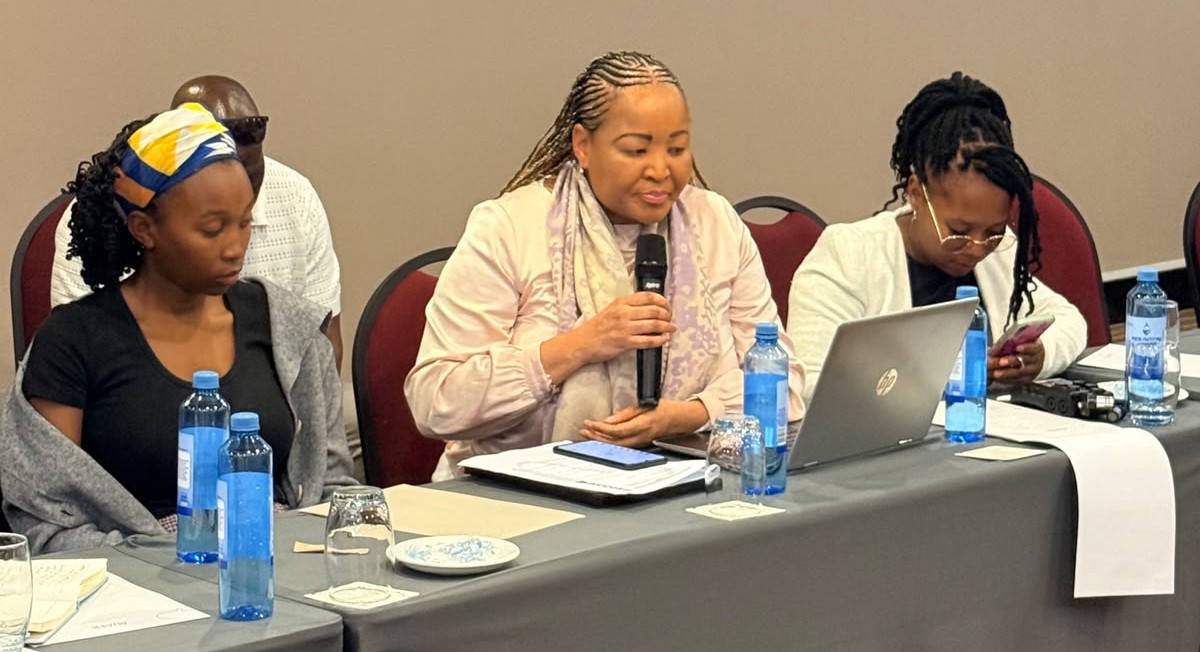
Discussions at a recent sensitization workshop for the ratification of the African Minerals Development Centre (AMDC) of the African Union, have laid bare, facts behind the loosely used ‘concept of mineral beneficiation’ in the mining sector.
The discussions indicated that beneficiation has become a slogan that is pursued, mainly by politicians and driven as a political campaign message, this, in spite of economics, scale, technology, infrastructure and market realities.
It became clear in the discussions that there is obsession with asking the rhetorical question: “How do we beneficiate Lesotho’s mineral deposits?”
However, a critical question that needs to be asked is: “At which point in the whole mineral value chain can Lesotho realistically capture additional economic value?”
The question should proceed to capture the following: “How can our mineral deposits create real employment, develop skills, create revenues and develop industrial linkages?”
A critical question has been what actually is beneficiation? The Commissioner of Mines, Mr Pheello Tjatja painstakingly explained the myth behind the concept of beneficiation in the mining sector. This was after being prompted by the Deputy Permanent secretary, Ministry of Energy and Mining, Mr Seboka Thamae to demystify beneficiation.
The Commissioner of Mines indicated that beneficiation is more complex that it is really made to be a simple concept, and that it is largely not realistically achievable.
Explaining to the workshop what it really is, Mr Tjatja explained that beneficiation is about adding value to a mineral deposit after its extraction through a process of sorting, grading, cutting to the sophisticated processing, refining and finally manufacturing.
This revelation at the workshop about the reality behind beneficiation came after an illuminating presentation on the AMDC made by the Programme Management Officer at the AMDC, Mr Mkhululi Ncube. Mr Ncube had made a detailed, informative and educational presentation on how Lesotho could make its mark by becoming the fifth county to have ratified the statute establishing the AMDC.
Four countries that have already ratified the statute establishing the AMDC are Guinea, Mali, Zambia and Nigeria. For the statute to officially enter into force and fully operatioinalised, a minimum of 15 ratifications is required.
This is the reason the AMDC has embarked on a sensitization campaign, seeking to obtain the required ratifications from member-states.
However, the workshop tended to demand answers on the critical issues surrounding the African Mining Vision (AMV), which was adopted by AU member-states in 2009.
The AMV is the AU’s framework for transforming the Continent’s mineral resources from largely extractive commodities into a foundation for inclusive economic growth, sustainable development and industrialization.
The Vision acts as a response to navigating solutions to the paradox of great mineral wealth of the Continent existing side-by-side with pervasive poverty. It is evident that, while Africa is mineral-rich, more than any other continent, paradoxically, its citizens have remained poor. Some have even attributed this paradox to a ‘resource curse in Africa.’ The AMDC is totally against the narrative of ‘a resource-cursed Africa.’ It opines that the paradox can be aptly attributed to natural resources policy incoherence in most countries, especially those endowed with huge mineral deposits like Angola and the Democratic Republic of Congo (DRC).
Mr Ncube had in his presentation, indicated that Lesotho was one of the first countries that piloted the Country Mining Vision (CMV) guidebook. This meant that the country was prepared to domesticate the AMV and align its mining policy with the Vision, which has, since its inception in 2009, been championed by the AMDC.
Another critical issue that formed part of the discussions at the sensitization workshop is that of the gradual formalization of artisan and small-scale mining, with particular focus on whether its phasing out would not erode rural livelihoods for citizens.
Meanwhile, the African Peer Review Mechanism (APRM) participated in the workshop as a supporter of good governance, which provides impetus to the AMV and the envisaged AMDC statute through.
The Technical Advisor to the APRM Secretariat Chief Executive Office, Advocate Batlokoa ‘Makong indicated that the role of the APRM is to diagnose governance challenges in the AU member-states. “Over the past two decades, we have produced no less than 48 Country Review Reports on governance in 30 member states,” said Advocate ‘Makong.
Encouraging Lesotho to ratify the statute establishing the AMDC, Advocate ‘Makong indicated that it is imperative for the Government of Lesotho to consider and take practical steps towards signing and ratifying the statute.
He said: “The AMC will assist the country in the following ways in order to enhance use of Lesotho’s mineral endowments for sustainable development, radical economic empowerment and prosperity for all.”
“Improving the quality of geological data: AMDC will enhance the Government knowledge of the potential value of mineral resources thus lead to fairer deals and more equitable returns on mineral sector investments.”
Meanwhile, the Deputy Permanent Secretary, Ministry of Energy and Mining, Mr Seboka Thamae said that Lesotho recognizes that the future of its extractive sector lies not only in responsible domestic governance, but also in its collective ability to harness the Continent’s mineral wealth for transformative, inclusive and sustainable development. Mining is said to contribute between 7-10 percent to Lesotho’s Gross Domestic Product (GDP), this being said to be driven by the country’s high-value diamond industry.
Mr Thamae promised that Lesotho would work towards signing and pushing for processes to ratify the AMDC Statutes.
He said: “By understanding the necessary domestic consultations such as this workshop, the continued alignment between our legal frameworks and the provisions of the Statute will allow us to stand well prepared when we deposit our instrument of ratification with the AU Commission.”
Lesotho is envisaged to benefit from its ratification of the Statute establishing the AMDC. One, the AMDC will build the capacity of the country to negotiate contracts from the standpoint of existing and potential mineral sector linkages. This is calculated to ensure that a greater proportion of resource rents is captured through flexible fiscal regimes that are sensitive to commodity price movements.
Two, AMDC will offer a combination of local and international strategies to enhance mineral governance capacities in Africa, including skills transfer and capacity building during contract negotiation.
-End-
What should be Lesotho's top economic priority?
Government is weighing where to focus limited resources. Where would you put them first?
Share this article
Related Articles

The danger of social media to society – creation and promotion of 'eco chambers'
Echo chambers, often amplified by social platforms, shape and dominate discourse, undermining equal participation, freedom of expression, and balanced debate.

The changing roles of media content consumers in the advent of social media, digital spaces and AI
Citizens have shifted from passive recipients to active creators and curators of information, driven by social media, ubiquitous digital devices, AI tools, and a demand for transparency.

Role of media in promoting global, national governance
Governance today faces myriad challenges disrupting value chains, fragmenting markets, and reshaping the global order. In this climate, the media's role in promoting transparency and effective governance becomes pivotal.